 by
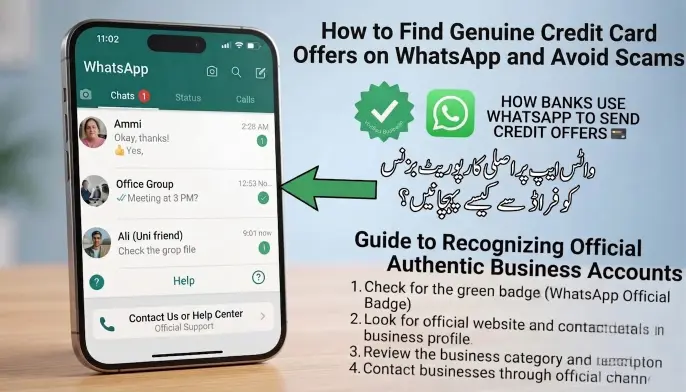
by WhatsApp has become a popular way for businesses and individuals to communicate. Because of this, some people may receive messages about credit cards, cashback offers, rewards, balance transfers, or limited-time banking promotions through WhatsApp.
While some messages may be connected to legitimate businesses or financial institutions, scammers can also use WhatsApp to create fake credit card offers. They may promise instant approval, unusually high credit limits, guaranteed rewards, or special interest rates.
The biggest challenge is knowing whether an offer is genuine before sharing any information or clicking a link.
In this guide, FinanceTrack America explains how to evaluate credit card offers received through WhatsApp, recognize warning signs, and protect your personal and financial information.
Why Credit Card Scams Appear on WhatsApp
WhatsApp makes communication fast and convenient, but that convenience can also be misused.
Scammers may send messages to people they do not know and claim to represent a bank, credit card company, financial advisor, or promotional agency.
A typical message may say that you have been selected for a special credit card, pre-approved for a large limit, or chosen for a limited-time cashback offer.
The goal is often to make the recipient act quickly without checking whether the message is authentic.
Can a Credit Card Offer on WhatsApp Be Genuine?
Yes, legitimate businesses may use WhatsApp or other messaging channels for customer communication, depending on their policies and the country in which they operate.
However, receiving a message on WhatsApp does not prove that the sender is legitimate.
You should independently verify the offer through the financial institution’s official website, mobile app, customer service number, or another trusted channel.
Do not rely solely on the contact information or website link provided in the WhatsApp message.
Common Signs of a Fake Credit Card Offer
Scammers often use similar techniques.
| Warning Sign | What It Could Mean | What You Should Do |
|---|---|---|
| Guaranteed approval | May be designed to attract quick responses | Verify the offer independently |
| Extremely high credit limit | Could be a misleading promise | Check with the official issuer |
| Request for upfront payment | Potential scam warning | Do not send money before verification |
| Urgent deadline | Designed to create pressure | Take time to verify |
| Unknown WhatsApp number | Sender may not be affiliated with the issuer | Contact the issuer through official channels |
| Suspicious link | Could lead to a fake website | Do not click until verified |
| Request for OTP | Could allow account access or transaction approval | Never share verification codes |
| Request for card PIN | Legitimate institutions generally do not need your PIN through WhatsApp | Do not provide it |
| Spelling or branding errors | May indicate an impersonation attempt | Verify the company independently |
| Request for full sensitive information | Could be an attempt to steal personal data | Stop and verify the request |
One warning sign alone does not always prove fraud, but several warning signs together should make you extremely cautious.
Verify the Sender Before Responding
The first step is to identify who is actually contacting you.
Do not assume that a WhatsApp profile using a bank’s logo belongs to the bank.
Scammers can copy company names, profile pictures, logos, and promotional language.
Instead, find the financial institution’s official website independently. Use the contact information published there to ask whether the offer is genuine.
This is much safer than calling a number provided in an unexpected message.
Never Share an OTP
One-time passwords, verification codes, and authentication codes should be treated as highly sensitive information.
If someone contacts you through WhatsApp and asks you to send an OTP, stop the conversation.
An OTP may be used to verify a login, payment, account change, or other transaction. Sharing it can potentially allow someone to complete an action that you did not intend to authorize.
A genuine customer-service representative should not need you to disclose a private verification code through an unsolicited WhatsApp conversation.
Be Careful With Links
A WhatsApp message may contain a link that appears to lead to a bank or credit card company’s website.
However, scammers can create websites that look almost identical to legitimate financial websites.
Before entering information, verify the website independently.
Instead of clicking the link in the message, open your browser and type the official website address yourself or use the institution’s official app.
Be especially careful if a link asks you to enter your password, card number, security code, PIN, or other sensitive information.
Never Pay an Upfront Fee for a Suspicious Offer
Some scams claim that you have been approved for a credit card but need to pay a processing fee, security deposit, verification fee, or other charge before receiving the card.
An upfront payment request does not automatically prove that an offer is fraudulent, because legitimate financial products can have legitimate fees. However, an unexpected payment request from an unknown WhatsApp contact is a major reason to stop and verify the offer.
Ask the financial institution directly whether the offer and fee are real.
Do not send money simply because the message says the offer will expire soon.
Check the Offer on the Official Website
If someone sends you a credit card promotion through WhatsApp, search for the same offer on the financial institution’s official website.
Compare:
- Card name
- Annual fee
- APR
- Rewards
- Welcome bonus
- Eligibility requirements
- Promotional period
- Application process
- Contact information
If you cannot find the offer anywhere on the official website, be cautious.
The absence of an offer does not automatically prove fraud, but it is a strong reason to verify the promotion before continuing.
Avoid Guaranteed Approval Claims
Credit card applications generally involve eligibility requirements and issuer-specific approval criteria.
Therefore, messages claiming “100% guaranteed approval for everyone” should be treated carefully.
Scammers may use guaranteed approval as a way to attract people who are worried about being rejected for traditional credit cards.
Instead of trusting a WhatsApp promise, check the card’s official eligibility requirements and apply through a legitimate application channel.
Be Careful With Personal Information
A credit card application can legitimately require certain personal and financial information.
However, you should never provide sensitive information simply because someone sends you a WhatsApp message.
Be especially careful with requests for:
- Online banking passwords
- PINs
- One-time passwords
- Security codes
- Full card details
- Login credentials
- Unnecessary identity information
Before providing any information, confirm who is requesting it and why.
Look for Pressure and Urgency
Scammers often try to make people act quickly.
A message may say:
“Your offer expires in 10 minutes.”
Or:
“Send your details now to receive instant approval.”
This type of pressure is designed to prevent careful thinking.
A genuine financial decision should not be based on panic.
Take time to verify the offer independently, even if the message claims that the opportunity is limited.
What to Do If You Receive a Suspicious Offer
If a WhatsApp credit card offer looks suspicious, do not respond with personal information.
You can:
- Stop communicating with the sender.
- Avoid clicking suspicious links.
- Do not send OTPs or passwords.
- Verify the company independently.
- Contact your bank or card issuer through its official channel.
- Block or report the suspicious WhatsApp account when appropriate.
If you already shared sensitive financial information, contact the relevant financial institution promptly through an official channel and follow its security instructions.
How to Find Legitimate Credit Card Offers Safely
The safest approach is to start with the financial institution rather than an unsolicited message.
Visit the official website of the bank or card issuer and review its current credit card products.
You can compare the annual fee, APR, rewards, introductory offers, eligibility requirements, and other terms directly from the official source.
If the institution officially confirms that it uses WhatsApp for customer communication, make sure you are communicating through the verified channel provided by the institution.
Final Thoughts
WhatsApp can be convenient for receiving financial information, but you should never assume that every credit card offer received through the platform is genuine.
Before accepting an offer, independently verify the sender, check the promotion on the official financial institution’s website, and carefully review the card’s terms.
Never share an OTP, PIN, password, or other sensitive security information with an unsolicited contact. Be especially cautious about suspicious links, guaranteed approval claims, upfront payment requests, and messages that pressure you to act immediately.
A few minutes spent verifying a credit card offer can help protect you from financial loss and identity-related fraud.
Remember that legitimate credit card offers should be evaluated based on their actual terms—not just attractive promises made in a WhatsApp message.
FinanceTrack America provides educational information about credit cards, banking, rewards, online safety, and personal finance to help readers make more informed financial decisions.