 by
by Credit card rewards have become one of the most popular features offered by credit card companies. Depending on the card, you may earn cash back, points, miles, discounts, statement credits, or other benefits when you make eligible purchases.
At first, rewards programs can seem complicated. One card may offer 2% cash back, another may advertise thousands of points, while a travel card may promote airline miles. These rewards can have different values and rules, so comparing them only by the numbers can be misleading.
Understanding how each rewards system works can help you choose a card that fits your normal spending habits.
In this guide, FinanceTrack America explains cashback, points, miles, reward rates, redemption options, welcome bonuses, and the important details you should check before choosing a rewards credit card.
What Are Credit Card Rewards?
Credit card rewards are benefits you can earn from eligible purchases made with a rewards credit card.
Depending on the card, rewards may be provided as:
- Cash back
- Points
- Airline or travel miles
- Statement credits
- Gift cards
- Travel benefits
- Other promotional rewards
The amount you earn depends on the card’s rewards structure and the type of purchase.
Rewards are generally designed to encourage card usage, but earning rewards should not be a reason to spend more than you can afford to repay.
Main Types of Credit Card Rewards
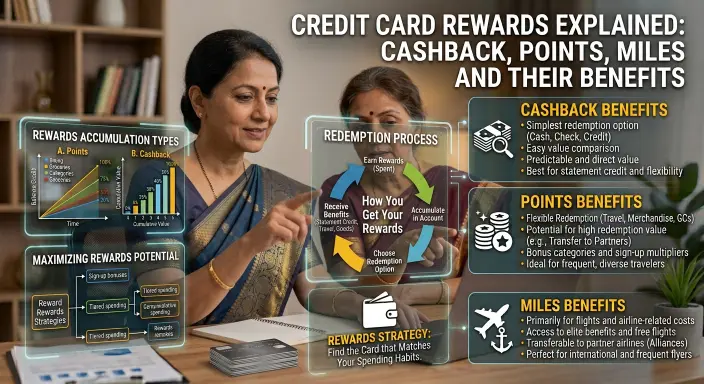
The three most common rewards systems are cashback, points, and miles.
| Reward Type | How It Generally Works | Common Redemption Options | Best For |
|---|---|---|---|
| Cash Back | Earn a percentage of eligible purchases | Statement credit, direct deposit, or other options | Simple everyday rewards |
| Points | Earn points based on eligible spending | Travel, gift cards, merchandise, statement credits | Flexible rewards users |
| Miles | Earn travel-oriented rewards | Flights, travel bookings, and other options | Frequent travelers |
| Welcome Bonus | Earn additional rewards after meeting requirements | Depends on the card | New cardholders who can meet the terms naturally |
| Category Rewards | Earn higher rewards in selected categories | Depends on the card | People with specific spending patterns |
The best option depends on how you normally spend and how you want to use your rewards.
How Cash Back Works
Cash back is one of the easiest reward systems to understand.
A credit card may offer a certain percentage of cash back on eligible purchases. For example, if a card provides 2% cash back on an eligible $100 purchase, the reward would generally be $2.
However, cash-back cards can have different structures.
Some offer a flat rate on eligible purchases, while others provide higher rates for selected categories such as groceries, restaurants, gas, or online shopping.
Some cards may also have spending limits or rotating categories.
Always check the card’s current rewards terms to understand which purchases qualify.
What Are Credit Card Points?
Points work differently from cash back.
A card may award a certain number of points for each dollar spent. For example, a rewards program could offer 1 point per dollar on certain purchases and a higher rate in selected categories.
The important thing to remember is that one point does not automatically equal one dollar.
The value of points depends on how they are redeemed.
For example, a rewards program may allow points to be used for travel, gift cards, merchandise, statement credits, or other options. Each redemption method may provide a different value.
How Credit Card Miles Work
Miles are commonly associated with travel credit cards.
Depending on the program, cardholders may earn miles from eligible purchases and redeem them for travel or other benefits.
Some cards are connected to specific airline loyalty programs, while others use flexible travel rewards that can be used across different travel options.
If you travel frequently, miles can potentially provide significant value. However, you should review redemption rules, transfer options, travel restrictions, and other conditions before choosing a miles-based card.
How Reward Rates Work
The reward rate tells you how much reward you may earn from eligible spending.
For example, a card might offer:
- 1% on general purchases
- 3% on selected categories
- 5% during specific promotional periods
A higher reward rate does not always mean the card is better.
You need to consider whether you actually spend money in the categories receiving the higher rate.
A card offering 5% on a category you rarely use may provide less practical value than a card offering a consistent reward rate on purchases you make regularly.
Welcome Bonuses and Sign-Up Offers
Many credit cards offer a welcome bonus to new cardholders who meet certain requirements.
For example, a card may offer additional points or miles after you spend a specified amount within a certain period.
Before applying, carefully check:
- Required spending amount
- Qualification period
- Eligible purchases
- Bonus amount
- Any exclusions
- Annual fee
- Redemption requirements
Never spend money you would not normally spend simply to earn a welcome bonus.
If you cannot comfortably repay the resulting balance, interest charges could outweigh the value of the reward.
Understanding Reward Redemption
Earning rewards is only one part of the process. You also need to understand how you can use them.
Cash back may be available as a statement credit or another payment option. Points may be redeemable for travel, gift cards, merchandise, or other benefits. Miles may be useful for eligible travel redemptions.
The redemption value can vary significantly.
Before choosing a card, look at the available redemption methods and determine whether they match what you actually want.
Are Credit Card Rewards Really Free?
Rewards can feel like free money, but they come with conditions.
The card may have an annual fee. Some rewards may require specific purchases or spending levels. Interest charges can also reduce or completely outweigh the value of rewards if you carry a balance.
For example, earning $20 in cash back does not necessarily mean you saved $20 if you paid significant interest to generate those purchases.
This is why responsible spending is more important than maximizing rewards.
Rewards and Annual Fees
Some premium rewards cards charge an annual fee.
That fee can be worthwhile for someone who regularly uses the card’s benefits, but it may not make sense for everyone.
When comparing a card with an annual fee, estimate the realistic value of the rewards and benefits you expect to use.
For example:
Estimated annual rewards: $250
Value of useful benefits: $100
Annual fee: $95
In this simplified example, the potential value could exceed the annual fee.
However, your actual value depends on your spending and how you use the card’s benefits.
Watch for Reward Restrictions
Rewards programs can have limitations.
Some cards may limit how much you can earn in certain categories. Others may change reward categories periodically or require activation.
There may also be restrictions on how points or miles can be redeemed.
Before applying, read the official rewards terms instead of relying only on advertising.
Do Rewards Expire?
Whether rewards expire depends on the specific rewards program.
Some programs may allow rewards to remain available as long as the account stays open and in good standing, while others may have expiration rules or additional conditions.
Always check your card’s current terms.
Also remember that rewards can sometimes be affected by account closure, returned purchases, or other circumstances depending on the program.
Cashback vs. Points vs. Miles
Choosing between cashback, points, and miles largely depends on your lifestyle.
Cash back is generally the simplest option because the reward is easy to understand.
Points can provide flexibility, particularly when a rewards program offers multiple redemption options.
Miles can be attractive for people who travel frequently and know how to use travel rewards effectively.
There is no universal winner. The best option is the one that provides useful value based on your normal spending and preferences.
How to Maximize Rewards Responsibly
You can improve the value of a rewards card without increasing unnecessary spending.
Use the card for purchases you already planned to make. Understand which categories offer higher rewards. Track promotional offers and check redemption values.
Most importantly, pay attention to your payment due date and balance.
If possible, paying the statement balance in full according to your card’s terms can help you avoid interest on eligible purchases when a grace period applies.
Rewards should support your financial habits rather than encourage additional debt.
Final Thoughts
Credit card rewards can provide useful benefits when you understand how they work. Cashback offers simplicity, points can provide flexible redemption options, and miles may be valuable for frequent travelers.
However, the advertised reward rate is only one part of the picture.
Before choosing a rewards credit card, compare the annual fee, APR, rewards structure, spending categories, welcome bonus, redemption options, limitations, and other benefits.
Most importantly, never spend more than you can comfortably repay simply to earn rewards. A small amount of cash back is not worth paying unnecessary interest.
The right rewards card should fit your existing spending habits and provide benefits that you can realistically use.
FinanceTrack America provides educational information about credit cards, rewards, banking, and personal finance to help readers better understand financial products and make informed decisions.